


It’s a Full Moon, the time of the month when I do a deep dive on a theme and offer 7 sensory recommendations to further explore that topic. I hope this month’s subject offers you an expansive way of channeling your most precious resource: your imagination.
Remember when you were a child and played “pretend”? You would naturally create worlds, turning a stack of sticks into a fort. You would script the most fascinating conversations between the sealed lips of your dolls. You would pour an empty kettle into little tea cups and sip the emptiness with gusto.
Children have no trouble living in an imaginary dimension. In fact, for them, it’s as real - if not more - than the material reality we embody. But somehow, along the way, we brush imagination aside and place logic on a pedestal.
Not to dismiss our logical thinking, which helps us navigate modern life’s complexities, but we often discredit the role imagination plays in guiding us. Whether it’s science, arts, or even politics, we believe that problems are solved solely by rational processes, when in fact imagination opens new spheres of possibilities. Anytime our thoughts wander into the territory of “what if…,” we’re walking into the field of imagination.
Unfortunately, as adults we often use our “what if’s” to construct worst case scenarios. They can range from low level anxieties – “What if I arrive late” – to full fledged crises – “What if this headache means I have an incurable disease.”
It seems to me that imagination is a neutral internal force. It can sway into the colorful world of child-play, or fall into the spirals of doom and gloom. For some reason, the latter is the game we seem to prefer engaging in as adults.
It’s evident in our sources of entertainment. How many films depict apocalyptic worlds? How many podcasts explore murder mysteries? How often are we enthralled by the world’s terrors (real or fictional)?
In many ways, I think it is easier (and lazier) for us to turn our own fears and neurosis into elaborate stories. It doesn’t take much to visualize the end of the world when watching the current devastating effects of our greed, pride, and envy.
But it demands more effort — and courage — to picture hope and beauty, rather than envision endless catastrophes. It requires subtle and profound changes in both our thinking and our behavior.
I suppose our mind convinces us that it’s more useful to picture bad scenarios, that somehow we’ll be better prepared when disaster strikes. But this is one of our most pervasive internal lies. Not only does it not set us up for the future, but it also robs us of our present moment, feeding our nervous system a continuous drip of cortisol and adrenaline.
When our imagination drifts to imagery of beauty, regeneration, and connection, we’re quick to dismiss them as unrealistic. We deem it irresponsible to daydream utopias that will never come to be.
But I would argue that, especially now, it’s imperative that we use our powerful inner engine to imagine the world we’d like to inhabit. We can’t build new realities without the ability to first picture them.
Not everything we envision will come to fruition, but it plants seeds of possibilities. Even our most absurdist and fantastical ideas are not a waste of time. They can offer us spaces to dream into, escape, or simply enjoy – and that in itself might be imagination’s most beautiful gift to us.
As Carl Sagan wisely wrote: “Imagination will often carry us to worlds that never were. But without it we go nowhere.”
For this Full Moon, I offer you seven imaginary worlds for our senses: SEE, HEAR, SMELL, TASTE, TOUCH, BALANCE, and ENVISION.
In Joy,
Sabrina

SEE
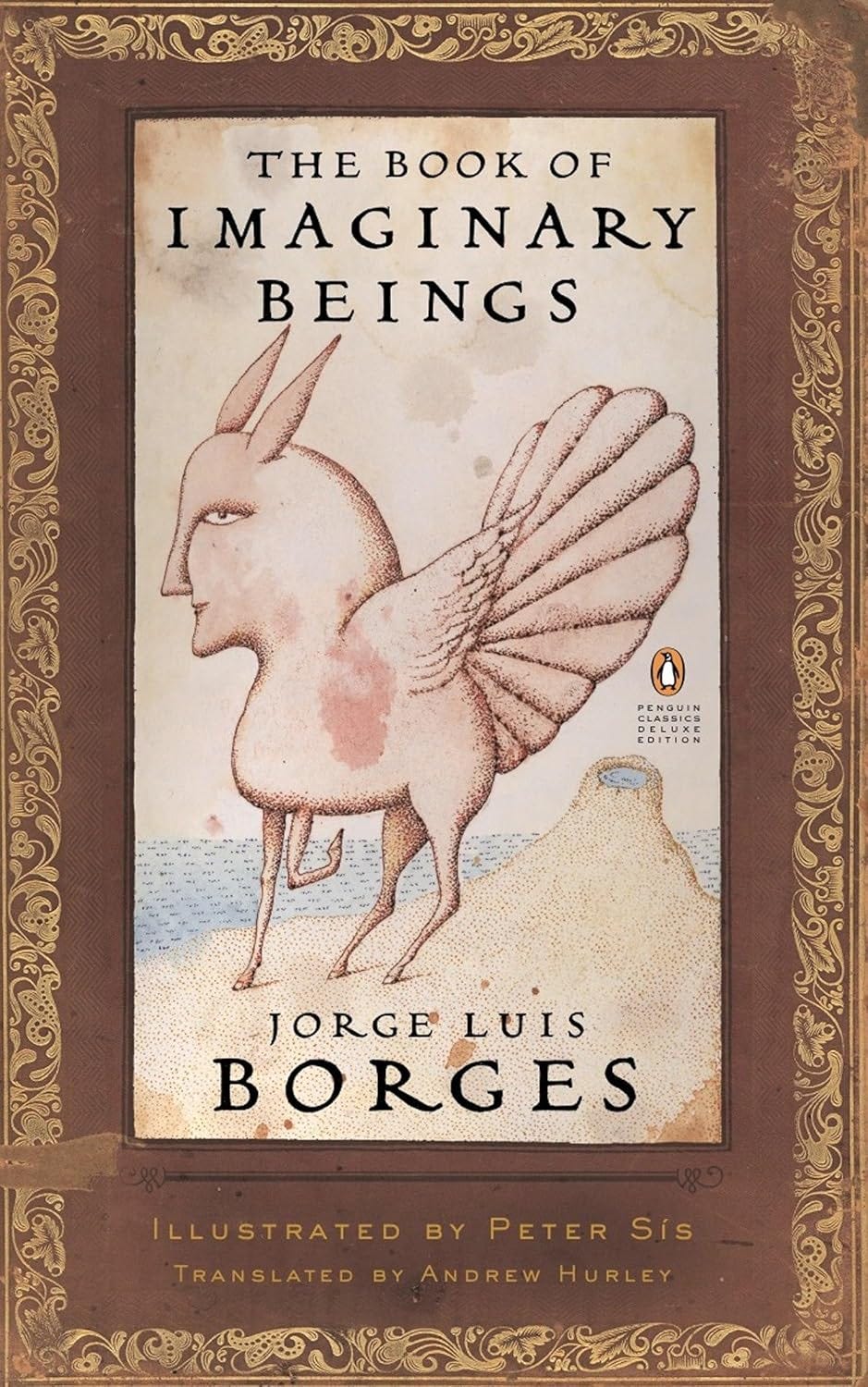
‘The Book of Imaginary Beings’ | book by Jorge Luis Borges
Available at bookstores and online
For thousands of years, across numerous cultures, we’ve conceived of imaginary beings: from unicorns to gnomes, from dragons to centaurs. This is one of my favorite books, an encyclopedia of strange creatures, examined by author Jorge Luis Borges. With illustrations by Peter Sís, Borges takes us on a wild journey of mythological creatures. Beyond those we’re familiar with, there are plenty more to discover, such as “Animals That Live in the Mirror,” “Six-Legged Antelopes” and “Spherical Animals.”

HEAR
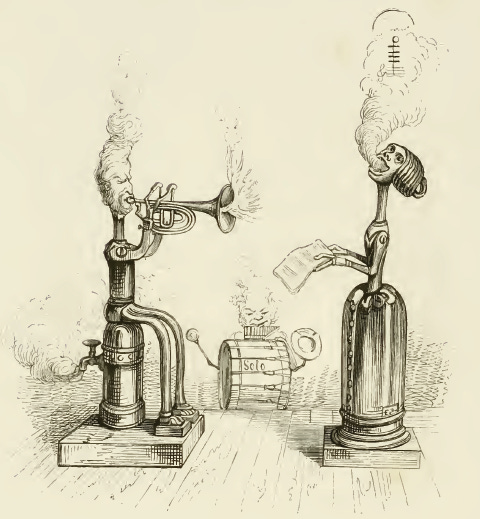
Museum of Imaginary Musical Instruments
Learn more online
This online collection of imaginary musical instruments was founded by Deirdre Loughridge, a professor of music at Northeastern University who specializes in eighteenth and nineteenth centuries music, and Thomas Patteson, a musician and musicologist based in Philadelphia.
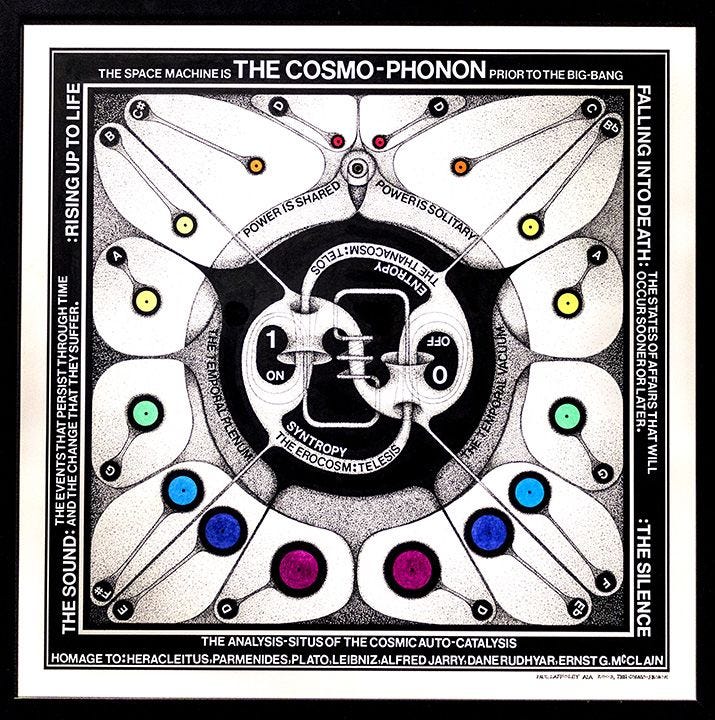
They’ve curated an assortment of conceptual instruments that are “concerned in the final analysis not with what is, but with what could be.” Those range from the ‘Cosmophonon’ for cosmic sounds (features cover image), ‘instruments that save extinct sounds (‘Tomorrow’s Eve’), or more disturbing inventions such as the cat-piano.
The entire collection is fascinating and I love that the website states: “Invention stems not only from necessity, as the cliché has it, but also from the irrepressible impulse for play, for experiment, for the joyful proliferation of the superfluous.”

SMELL
Phantosmia and Scent Meditations
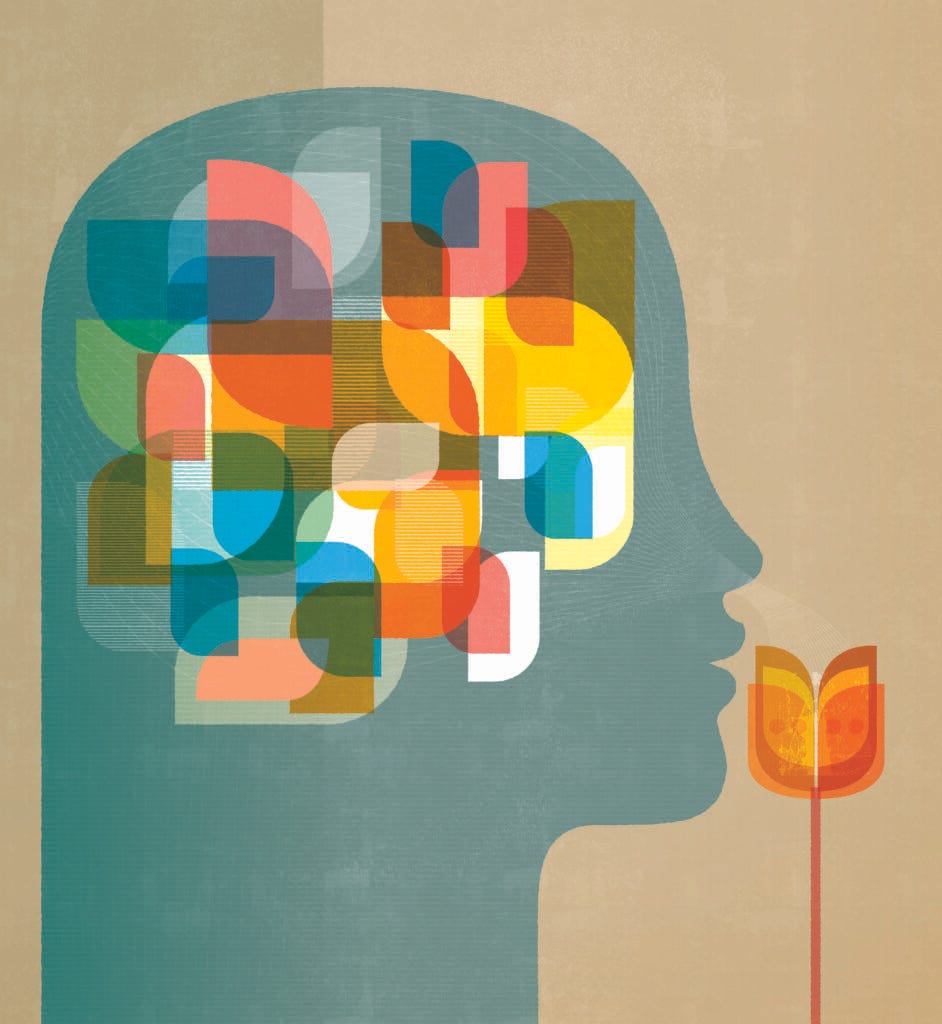
When it comes to smell, I wondered if any scents could be imagined. It led me down a long rabbit hole of research. I discovered a condition called phantosmia, which is when people detect scents that aren’t actually there. This is usually linked to a medical condition, whether due to brain injuries or even COVID. These olfactory hallucinations range from alarming odors (such as smoke) to pleasant ones, like freshly baked sweets.
Most of us will hopefully never experience Phantosmia. However there are other ways to imagine scents. Tasha Marks, who creates custom-made odours for spaces, describes in an interview, her experience of a “smell meditation.”
Led by a renowned perfumer, she was asked to visualize and then “olfactorize” a fruit. She describes the experience: “After you’ve spent a long time picturing it, you bring it to your mind’s nose and see if you can smell it. It was the first time I’d ever imagined a smell and it was a really uncanny sensation.“

TASTE
Cook Fiction
Recipes available online
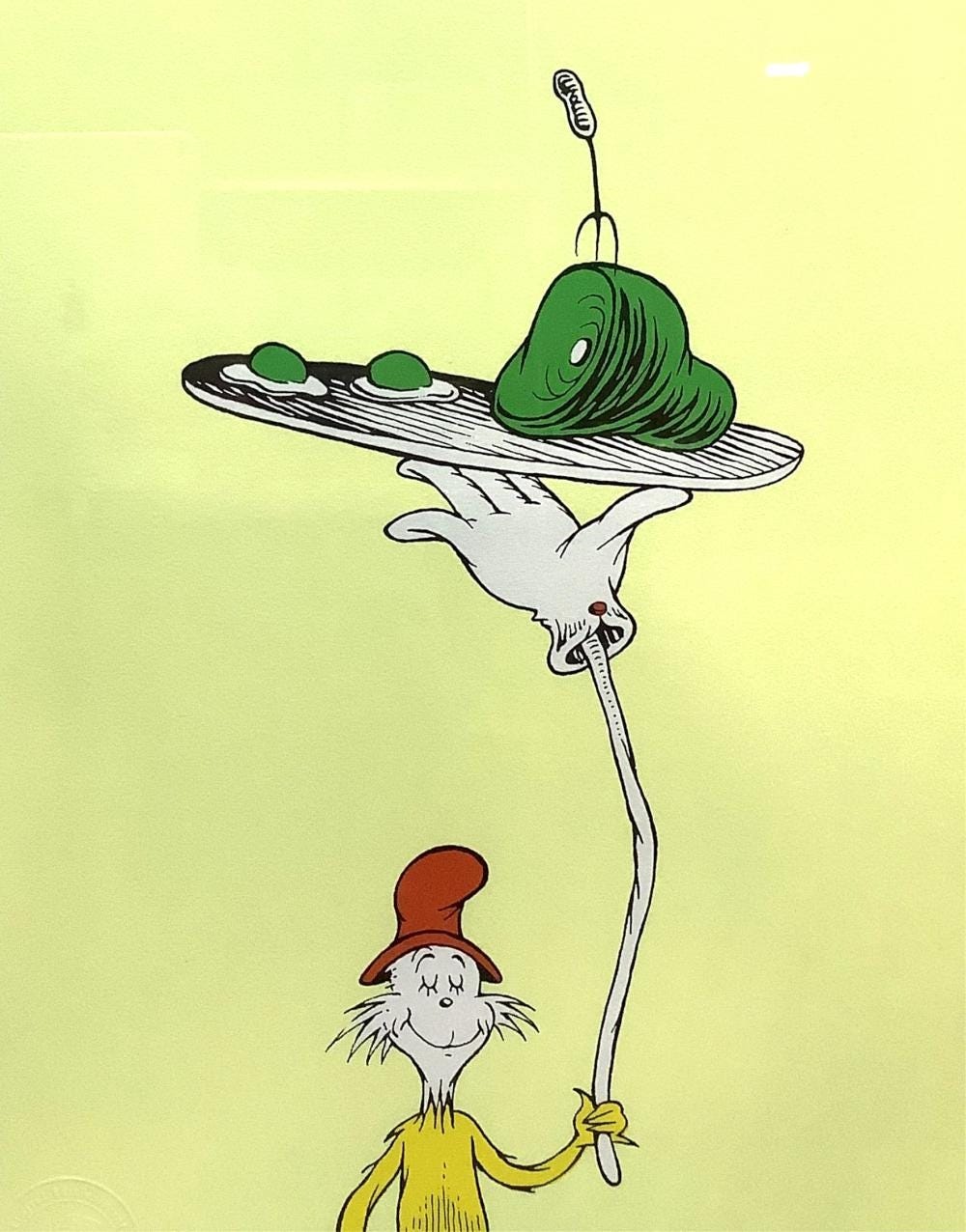
Have you ever come across a fantasy food (in a book or film) and wondered what that might taste like? Luckily, I recently discovered a website that has developed recipes for all sorts of fictional foods. You can look up dishes according to types of meals (appetizers, entrees, desserts, drinks) or entertainment categories (books, films, TV shows, video games, etc).
Since these are all fictional foods, I’m not sure how the recipes were developed, but a number of them look tasty. Even though I’m not a fantasy-fan, I’m intrigued to try the “Ent-Draught” drink from ‘Lord of the Rings.’ The book (and movie) describes it as “The effect of the draught began at the toes, and rose steadily through every limb, bringing refreshment and vigour..."
Here’s the recipe:
- 6 cups water
- 1/2 cup white tea leaves
- 1 tbsp thyme leaves
- 1 tbsp mint leaves
- (fresh) chamomile leaves
- 1 tbsp chamomile leaves
- 5 cups ice cubes
- mint sprig
METHOD:
- Bring water to a boil.
- Add herbs, allowing water to simmer for 1 minute before turning off heat.
- Let the tea steep and cool (about 20 minutes).
- Fill a pitcher with ice. Garnish with mint sprig (optional).
- Pour tea over ice and stir.
- Serve chilled.

TOUCH
The Tarot Garden
Visit in Pescia Fiorentina (Tuscany, Italy)
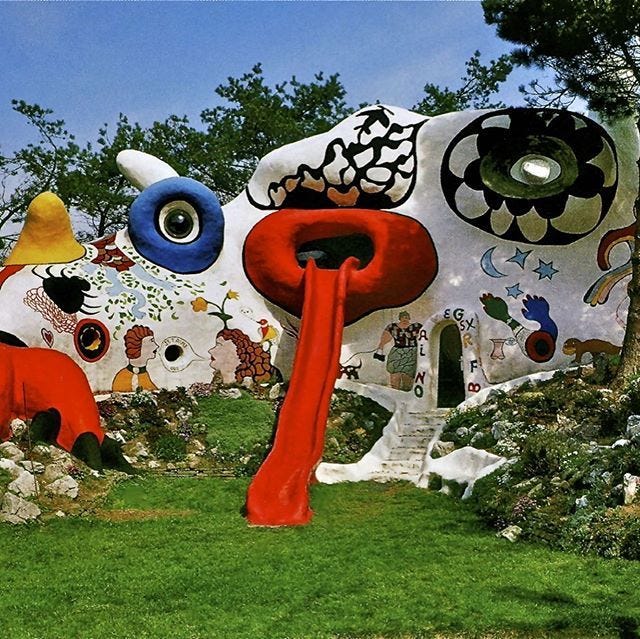
I’ve been dreaming of visiting this sculpture garden for years. Created by French-American artist Niki de Saint Phalle, the park contains 22 giant figures representing the greater Mysteries of the Tarot.
Inspired by Gaudí’s Parc Güell (Spain), the Palais Idéal by Ferdinand Cheval (France), and the Watts Tower in Los Angeles, Niki de Saint Phalle decided to create her own sculpture garden. After buying a plot of land in Italy in 1979, she spent the next twenty years developing the sculptures for her visionary Tarot Garden, using found objects, mosaics and other materials.
Many of the large sculptures can be walked through and the artist herself lived inside the sphinx-like Empress for several years during the construction of the garden.

BALANCE
Exquisite Corpse
I was reminded of this game this week, as my partner and I played it during a museum visit which offered it as a creative prompt.
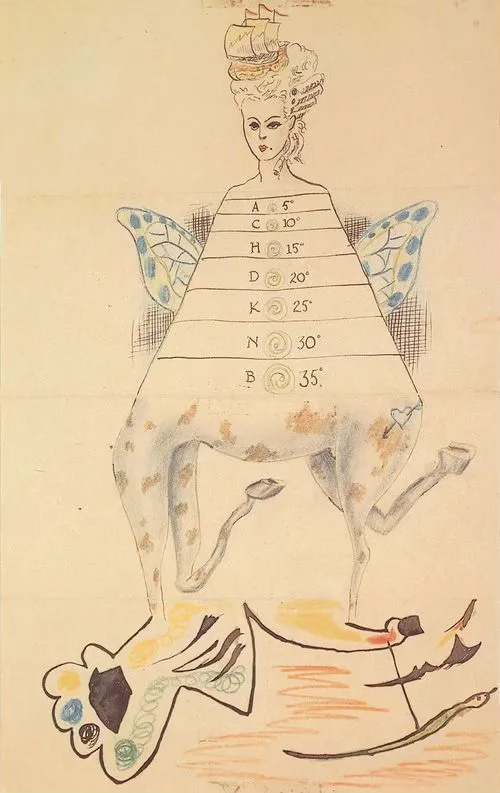
The game was invented in 1925 in Paris by Surrealists artists André Breton, Yves Tanguy, Jacques Prévert, and Marcel Duchamp. The rules are simple: each participant takes turns drawing on a sheet of paper, folding it to conceal their contribution, and then passing it on to the next person to draw.
The original prompt was to draw a body, with the first person drawing a head, the next a torso, then hips, legs, etc. Once the drawing was completed, the paper would be unfolded to reveal the full image.
One can also use other mediums – such as collage or words -- to create imaginary beings or stories.

ENVISION
The Codex Seraphinianus (1981)
Rare (and expensive) book available online
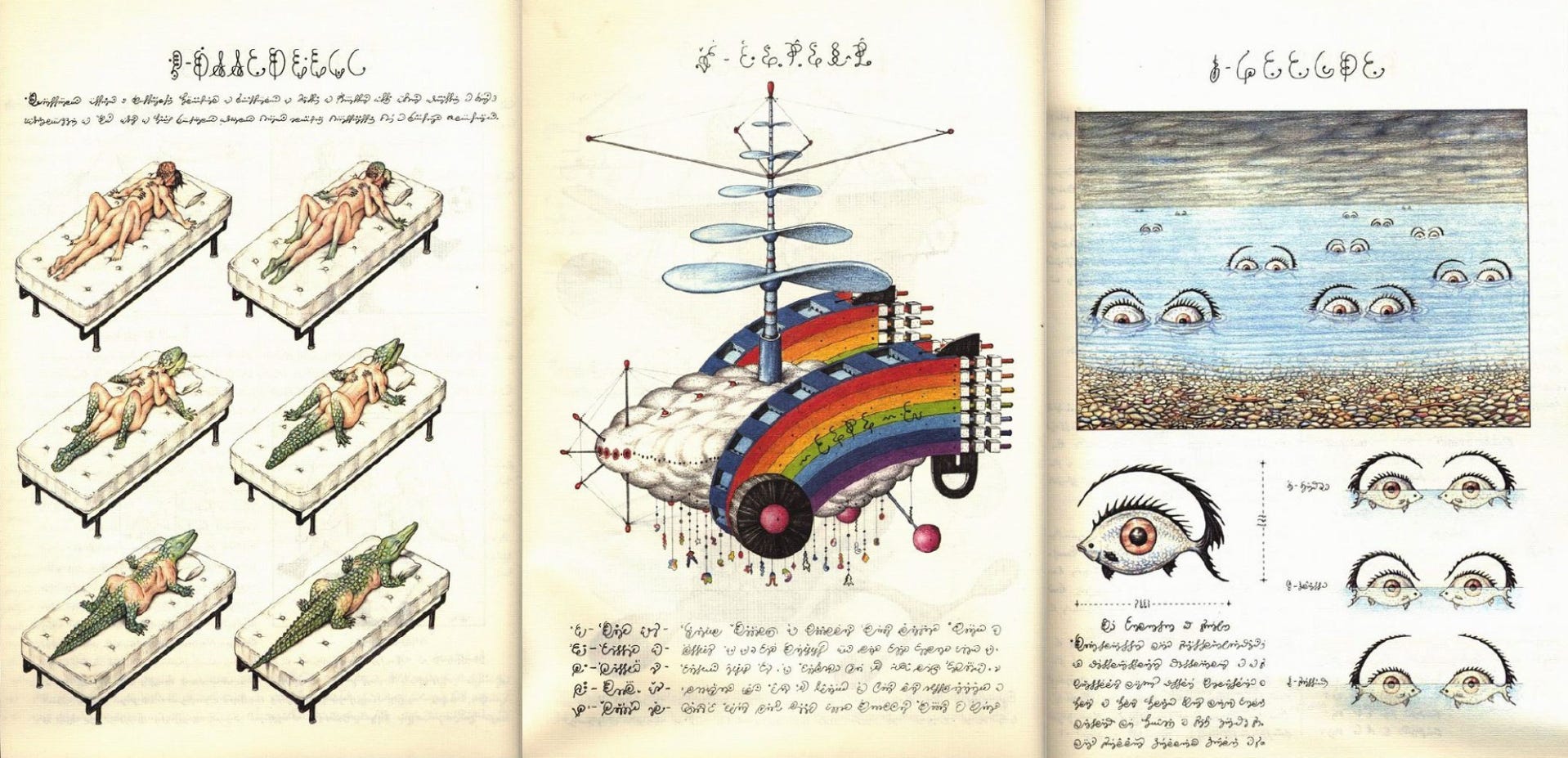
The Codex Seraphinianus is an illustrated encyclopedia of an imaginary world, created by Luigi Serafini, an Italian artist, architect and industrial designer.
Written in an imaginary language, the book includes 360 illustrated pages that depict bizarre and fantastical flora, fauna, anatomies, fashions, and foods.
Serafini stated that the made-up language is asemic, relying on automatic writing, and that it has no meaning. He wanted his alphabet to convey “the sensation children feel with books they cannot yet understand, although they see that the writing makes sense for adults.”

I’m new to Substack and my first search was for newsletters containing the number 7 because of my own creative experiment involving that special number - so I love the 7 senses concept that prompts your reflections - I look forward to reading more.
I love the idea that we have to know what we want before we can imagine it. So true. So necessary.