


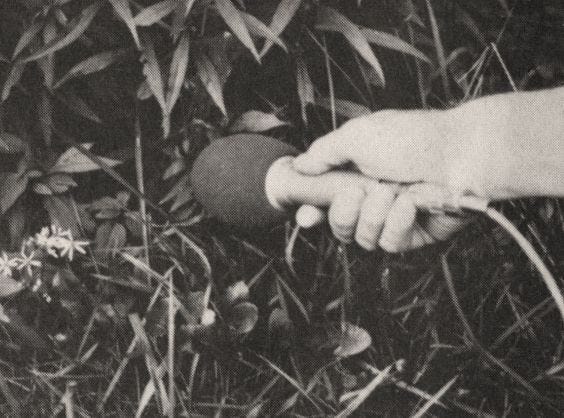
When my partner does the dishes, he puts on a podcast. Two men, usually, debating something: politics, UFOs, the afterlife, a football trade. The subject changes; the format never does. Talking, talking, talking.
As a social species, whose brain is constructed around language, it’s no surprise that we gravitate towards words. As a writer, I understand that urge. Words are how we connect, how we make sense of things, together, out loud. But I think we also just can't stand the quiet, or not knowing something. Talking fixes both. Or feels like it does.
I first felt the cost of that on a Vipassana meditation retreat: ten days of silence, no talking, no reading, no eye contact. What surprised me wasn't just how much noise my own mind made. It was everything else. The world doesn't go silent when you stop speaking. It gets louder: insects, wind, the specific creak of a specific tree. We assume nature is subtle, but its sound is constant. What’s rare is a person quiet enough to register it.
Nature has been talking the whole time, in registers we’ve mostly stopped listening for. In about thirty-five desert sites, from California’s Kelso Dunes to the Namib, avalanching sand produces a boom that carries for miles. Scientists still argue over exactly why.
A tree doesn’t announce itself either, but stand under one long enough and there’s a whole architecture of sound in it: wind moving through structure, water traveling root to leaf, a language with no words in it at all.
A few months ago, I told you about a radio dedicated to trees. It turns out there are dozens of other platforms dedicated to the sounds of nature too. I don't think they're meant to replace the real thing: nothing beats a stroll in the woods, gazing at the ocean, climbing a mountain. Time in nature is a fully sensory experience. But on the days you can't get there, these platforms still give you the one thing that matters: something soothing and connective to listen to instead of something to say.
Maybe you're stuck at a desk this summer, or sealed into an apartment with the AC on. These seven platforms invite you to discover a birdsong you've never heard, or fall in love with a forest on another continent without ever setting foot in it. For five minutes you stop thinking altogether and immerse yourself in nature’s soundscape.
Sabrina
PS: I typically offer one recommendation per sense, but today’s edition is dedicated exclusively to SOUND.

Tree.fm
Built in 2020 by a Berlin developer using crowd-sourced recordings from the Sounds of the Forest project, Tree.fm strips away everything but the forest itself: no narration, no music laid over the top, just the specific sound of a specific place, picked at random from contributors around the world.

Songs of the Humpback Whale
In 1970, biologist Roger Payne released an album made of nothing but whale song, no instruments, no lyrics, and it became the bestselling nature recording in history. It also helped launch the Save the Whales movement.

Earth.fm
Sometimes called "Spotify for soundscapes," this nonprofit platform streams over a thousand field recordings from more than a hundred countries, with proceeds funding conservation in the places recorded.

Radio Aporee
A sound map of the entire earth. Click any point and hear a field recording made exactly there, crowd-sourced by contributors for over two decades. It's less a platform than a way of traveling through sound.

Naturespace
Recorded over two decades using proprietary 3D microphone technique, this catalog of spatial nature recordings is built to be heard on headphones, where rain, wind, and birdsong move around you the way they would outdoors. (naturespace.org)

Rainforest Connection (RFCx)
A nonprofit that repurposes old smartphones into solar-powered listening devices hidden in rainforest canopy, streaming live audio that also helps rangers detect illegal logging in real time

Elephant Listening Project
Founded by Katy Payne, the same researcher behind the whale-song album, this project records elephant infrasound, frequencies below human hearing, and speeds it up until it becomes audible.

Just fantastic!
Australia for us first and foremost, is the unique soundtrack of its bush